

As the Gwinnett County seat, Lawrenceville carries more than two centuries of history, and its neighborhoods reflect every era of residential development that came with it. The blocks closest to the historic downtown square are lined with homes from the early and mid-20th century, many of them well-maintained but running mechanical systems that were never designed to last this long. Farther out, the subdivisions that filled in during Gwinnett’s explosive growth period of the 1980s and 1990s now house a generation of furnaces that are reaching or well past the end of their expected service life.
The sheer density of Lawrenceville’s residential footprint makes it one of the busiest service markets in our coverage area. With that density comes variety, not just in housing age but in duct configurations, fuel types, and equipment generations. Slab foundations are common in the postwar subdivisions, which changes how duct systems are routed and where heat loss tends to occur. Homes built on slabs with duct runs in the attic face a different set of efficiency challenges than those with basement or crawl space configurations.
Conditioned Air Systems has been working in Gwinnett County since 1983. Lawrenceville has been part of our territory through every growth wave this county has seen, and we know what these homes need.
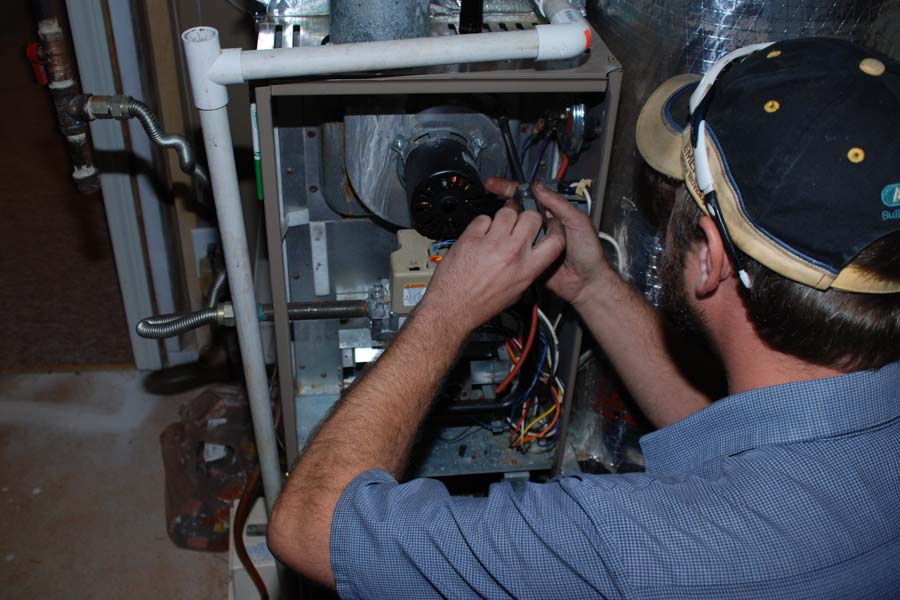
In a community with as much housing variety as Lawrenceville, furnace problems take different forms depending on the age and type of home. Regardless of when your house was built, these are the signs that point to a system in need of attention.
A gas smell near the unit or vents is the one on that list that should prompt immediate action. Turn the system off, avoid using any open flames or electrical switches near the area, leave the house, and call us. A gas leak near a furnace is not something to investigate on your own.
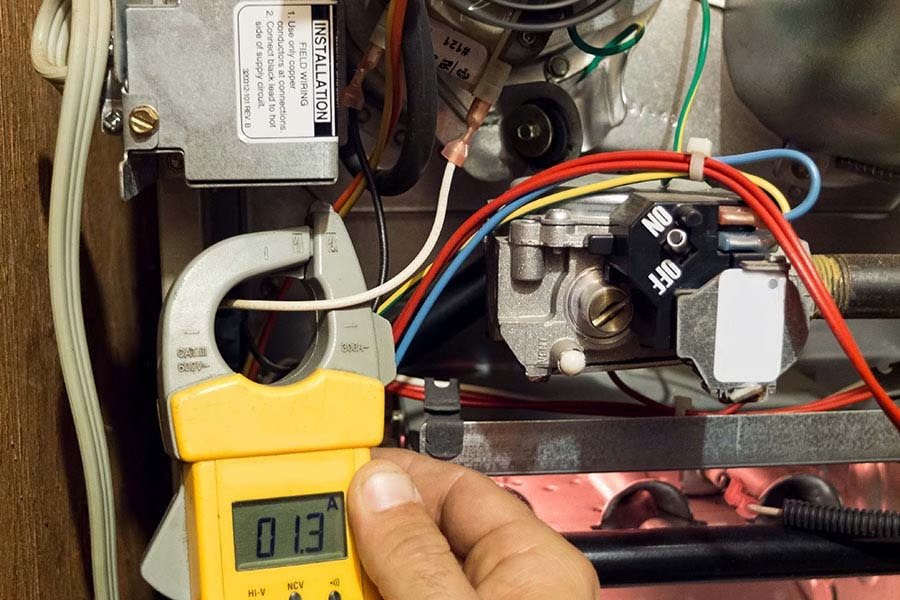
The 1980s and 1990s subdivisions that make up a large share of Lawrenceville’s residential landscape are producing a steady stream of heat exchanger replacements and full system failures right now. Furnaces installed during that building period are between 25 and 40 years old, and the ones still running are operating well beyond their design lifespan. Cracked heat exchangers, failed inducer motors, and burned-out control boards are the most common findings in that generation of equipment. When we arrive at a home in one of those older subdivisions, we approach the inspection knowing that the system may have multiple issues developing simultaneously.
Attic duct performance is a persistent challenge in Lawrenceville’s slab-foundation homes. With no crawl space to route mechanical systems through, ductwork runs entirely through the attic, where summer heat and winter cold create an environment that degrades insulation wrap, loosens flex connections, and causes thermal losses that force the furnace to work harder year after year. By the time a homeowner notices the system struggling in winter, the duct system may have been bleeding efficiency for several seasons.
We also see a significant number of calls from homeowners in Lawrenceville’s mid-2000s subdivisions where the original equipment is approaching or just past the ten-year mark. Capacitor failures, inducer motor issues, and pressure switch faults are all common in that age range, and they are the kinds of targeted repairs that extend a system’s useful life by several years when caught early.
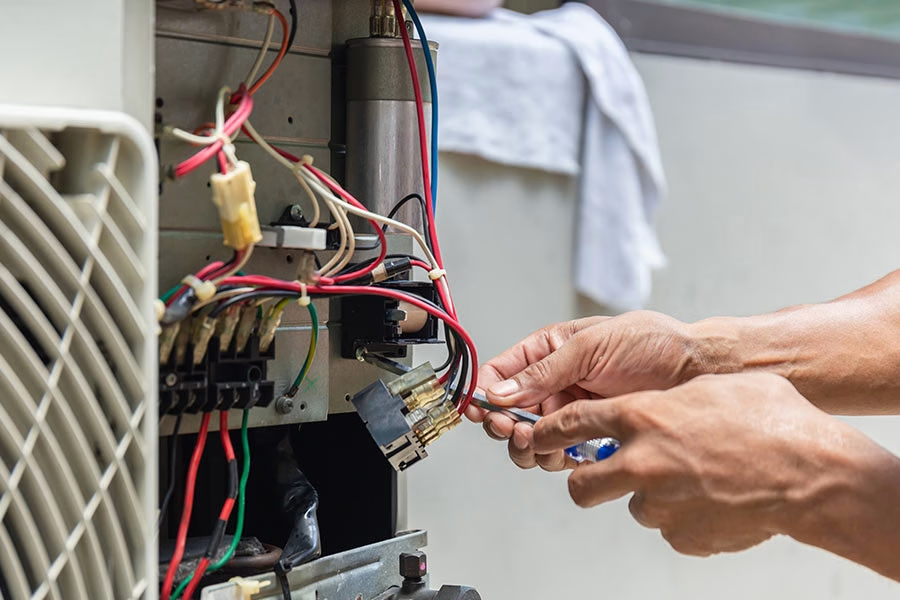
We stock our service vehicles with parts common to the equipment generations most frequently found in Gwinnett County, which means we arrive prepared rather than showing up to diagnose and then scheduling a second trip to actually fix anything. The visit starts with a full system inspection covering the heat exchanger, burners, ignition system, flame sensor, blower motor, inducer, flue venting, and all safety controls. For attic duct systems, we also evaluate accessible connections and insulation condition as part of understanding the full picture.
After the diagnostic, we walk you through what we found in plain terms. We distinguish between what needs to be fixed now for safety or reliability and what can reasonably wait, and we give you the information to make that call yourself. No pressure, no manufactured urgency, no bundling unrelated items into the estimate to inflate the ticket.
Every repair is backed by a full one-year warranty on parts and labor. Our NATE-certified technicians train monthly on all makes and models, from the oldest equipment still running in Lawrenceville’s historic neighborhoods to the most current high-efficiency systems in its newest construction. That range of knowledge is something we take seriously because the homes in this community demand it.
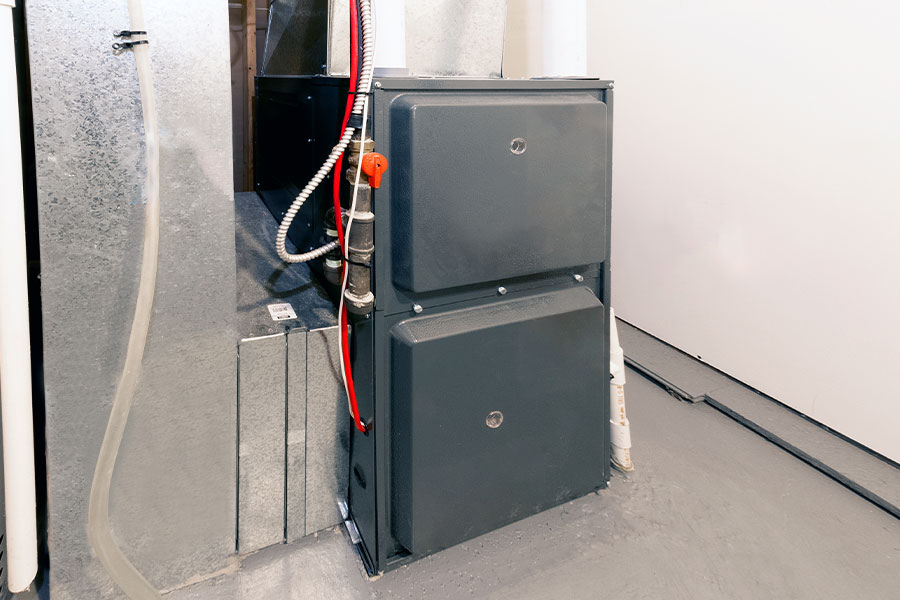
Sugarloaf Country Club is one of the larger and more recognizable communities in the Lawrenceville area, with homes that were built primarily from the mid-1990s through the early 2000s. That puts most of the original HVAC equipment in the zone where failures become increasingly common, and it is exactly where we found ourselves on a call last February with a homeowner named Terrence.
Terrence had noticed that his furnace was kicking on normally but shutting off after just a few minutes of running, never long enough to bring the house up to temperature. He had already changed the filter and checked the thermostat settings before calling us. When our technician ran through the diagnostic, the inducer motor came back as the culprit. It was drawing significantly more current than spec, which was triggering the thermal overload protection and shutting the system down to prevent damage. Left unaddressed, a failing inducer motor can overheat and take the control board with it, turning a single-part repair into a much more expensive situation.
We replaced the inducer motor on the same visit, verified the flue was drafting correctly with the new motor running, and confirmed the system cycled cleanly through several heat sequences before we wrapped up. Terrence said he had been dealing with the short cycling for about a week and was relieved it turned out to be a contained repair. That is usually how it goes when people call us before a manageable problem becomes an emergency.
Gwinnett County has no shortage of HVAC companies competing for the same calls. What separates us is not a slogan. It is four decades of consistent work and a standard of service that treats every home like it is our own. Here is what you get when you call us.
With more than 75 professionals across north Georgia, we have the depth to respond quickly and the experience to get it right. In a county as busy as Gwinnett, that combination matters.
Short cycling after startup is most commonly caused by a failing inducer motor, a tripped limit switch from restricted airflow, a dirty flame sensor, or a heat exchanger that is overheating. A technician can identify the cause quickly with a full diagnostic and in most cases complete the repair on the same visit.
The general guideline is to compare the repair cost against the age and remaining value of the system. If the furnace is over 20 years old and the repair approaches half the cost of a new system, replacement often makes more financial sense. We give you honest numbers and let you decide without any pressure.
Yes, and it is one of the more common findings in Lawrenceville homes built on slabs. Attic duct systems lose insulation efficiency over time and are prone to connection failures from repeated thermal stress. Heat lost through degraded attic ducts forces the furnace to run longer cycles and raises your energy bills before the performance drop becomes obvious.
The inducer motor pulls combustion gases through the heat exchanger and out the flue before the burners ignite. If it fails or runs below spec, the furnace will not light or will shut down on a safety lockout. It is one of the more common failure points in furnaces from the 1990s and early 2000s, which make up a large share of Lawrenceville’s housing stock.
In most cases, yes. We stock our service vehicles with parts common to the equipment found throughout Gwinnett County, which allows us to complete the majority of repairs on the first visit. For less common parts, we will give you a clear timeline and follow up as quickly as possible.