


Raoul is an unincorporated community in the northeastern corner of Hall County, situated between Gainesville and the foothills that begin climbing toward White and Habersham counties. It is the kind of place that does not show up on most maps but is well known to the families who have lived here across generations. Homes in Raoul tend to sit on larger rural parcels with mature trees, and the residential character skews decisively older, with a significant share of housing built before energy codes, insulation standards, and high-efficiency mechanical systems were part of the conversation.
The terrain here matters to how furnaces behave in winter. Raoul’s northeastern position in Hall County places it closer to the foothills than most of the county, and cold air settles into the hollows and low-lying areas between the ridges in a way that flat-terrain communities simply do not experience. A home sitting in one of those natural cold pockets can see overnight temperatures three to five degrees colder than what a nearby ridge-top property records, and a furnace that was adequately sized for average regional temperatures may struggle to keep pace on those coldest nights.
Conditioned Air Systems has been serving all of Hall County since 1983, and Raoul is part of the territory we know well. When your furnace needs attention out here, we are the company that shows up.
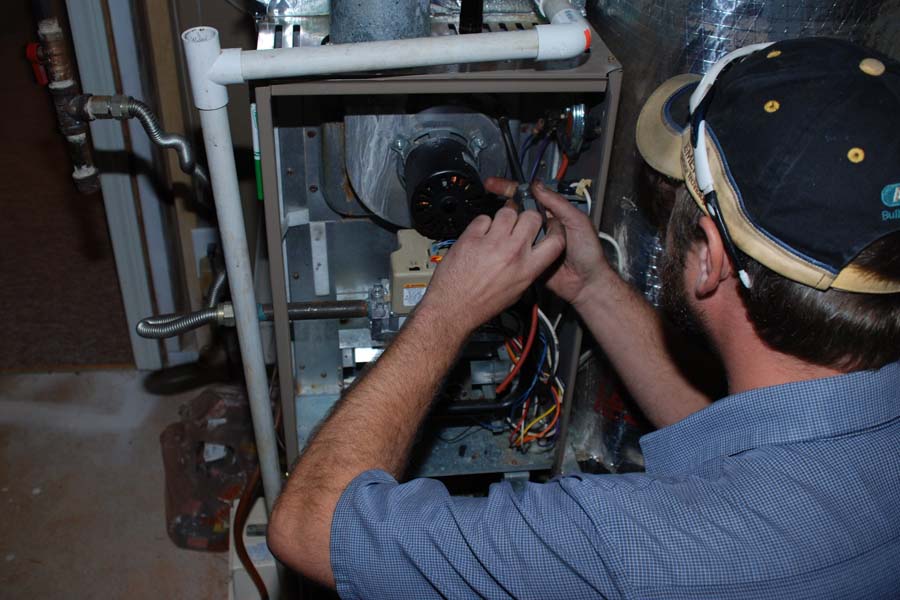
In a rural community like Raoul where the nearest parts supplier is not around the corner, catching furnace trouble before it becomes a full failure matters more than it does in town. These are the signs worth calling about sooner rather than later.
Equipment that has never been professionally serviced is worth calling out on its own. In rural areas like Raoul, it is not uncommon for a furnace to run for a decade or more without a formal inspection, which means small developing problems compound without anyone catching them. The first visit from a technician in that situation often turns up more than one issue that has been quietly worsening in the background.
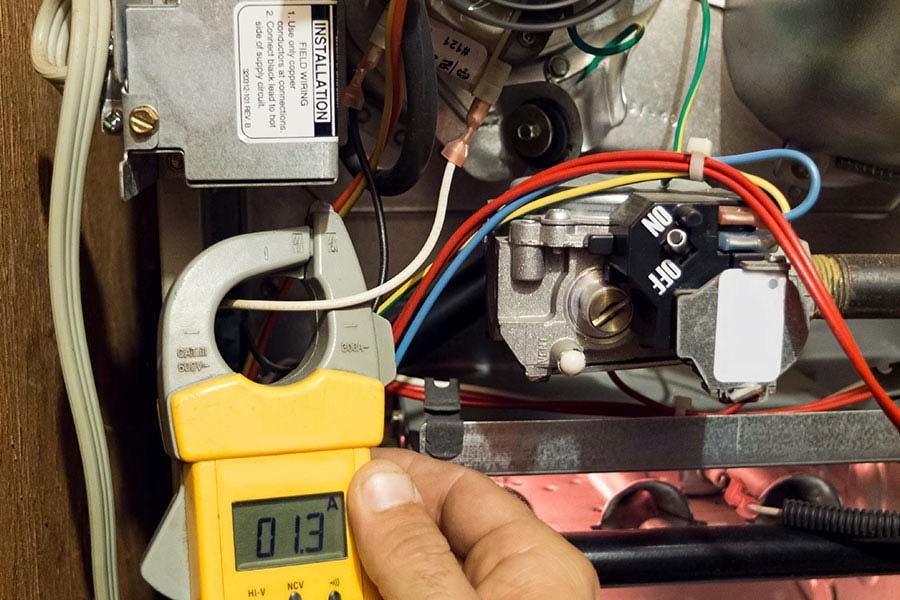
The older homes in Raoul present a particular set of challenges that are rooted as much in how they were built as in how old the equipment is. Many of these homes have minimal wall insulation and single-pane windows that allow heat to escape fast enough that the furnace is essentially fighting a losing battle on the coldest nights, regardless of how well the mechanical system itself is functioning. When a furnace is running at or near capacity just to maintain 68 degrees indoors, every component wears faster than it would in a more efficiently sealed home. Heat exchangers crack sooner, blower motors fatigue earlier, and ignition systems experience more stress cycles per season than their rated lifespans account for.
Ground moisture is another factor that comes up consistently in Raoul. The wooded lots and natural hollows throughout the area retain moisture year-round, and homes without properly sealed or vented crawl spaces draw that moisture upward into the structure. Duct runs in those crawl spaces are subject to persistent humidity that degrades insulation wrap, loosens connections at the joints, and introduces condensation into the duct interior during temperature swings. Over several seasons, that moisture works against both efficiency and air quality in ways that are easy to overlook until the problems become visible.
We also see a higher-than-average rate of gas valve failures and cracked heat exchangers in Raoul compared to more recently developed communities. Both reflect the age of the equipment and the demanding operating conditions these systems face in homes that were never built with efficiency as a priority. These are not unfixable problems, but they need a technician who goes looking for them rather than stopping at the most obvious symptom.
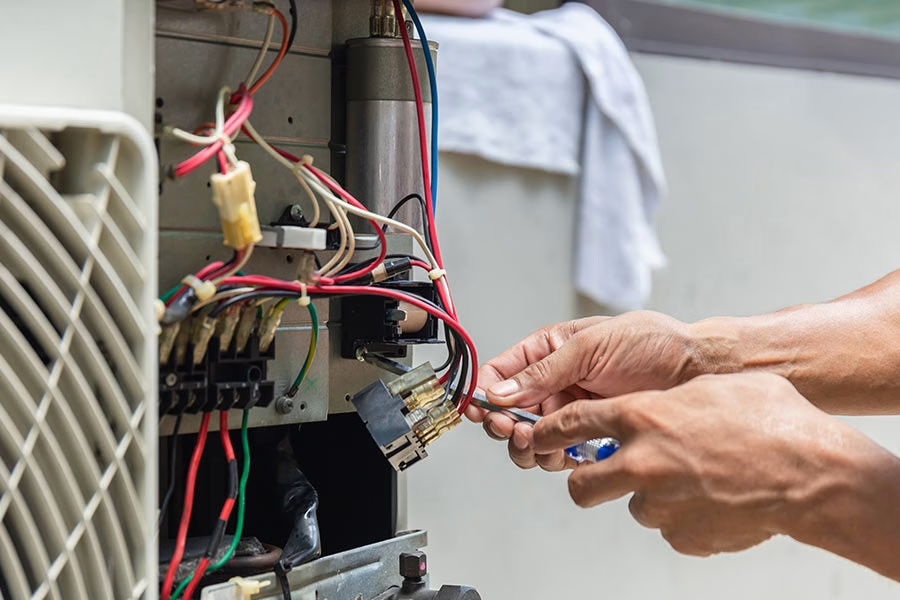
Rural service calls require a different kind of preparation than a standard subdivision visit, and we account for that. Our technicians arrive stocked for the equipment types common in northeast Hall County, including older single-stage systems, standing pilot configurations, and gas valves that require hands-on calibration rather than a simple component swap. The diagnostic covers the heat exchanger, burner assembly, ignition system or pilot setup, gas valve, blower motor, flue path, and all safety controls. For homes with crawl space duct systems, we inspect accessible duct runs for moisture damage, insulation loss, and connection failures that may be compounding the heating problem.
We also take the time to understand the home itself before drawing conclusions about the furnace. A system that appears to be underperforming may actually be doing its job reasonably well in a structure that is losing heat faster than any furnace its size could replace it. Understanding that distinction changes the repair conversation entirely, and it is something we make a point of getting right rather than assuming every problem lives inside the equipment cabinet.
All repairs are backed by a full one-year warranty on parts and labor. Our NATE-certified technicians train monthly and maintain working knowledge of older equipment generations that are still in active service throughout communities like Raoul. We do not consider a system too old to service if it is still repairable, and we give every homeowner an honest picture of where their system stands.
Raoul has no subdivisions to name, but the calls we get here have a consistency to them that tells you something about the community. A couple of winters back we responded to a call from a homeowner named Gerald whose furnace had been putting out heat all day but could not hold the house above 65 degrees once the temperature outside dropped into the low 20s overnight. He had already replaced the filter and checked that the thermostat was set correctly before calling us.
When our technician arrived the next morning and ran a full diagnostic, the furnace itself was actually in reasonable shape for its age. The heat exchanger had no visible cracks, the burner was firing cleanly, and the blower motor was running within normal parameters. What was not in reasonable shape was the crawl space. Three duct connections had pulled loose from their collars over what appeared to be multiple seasons, and the insulation wrap on the main trunk line had deteriorated badly enough that the duct surface was exposed to the cold air pooling under the house. The system was producing heat, but a significant fraction of it was being surrendered to the crawl space before it had a chance to reach the living areas above.
We reconnected and secured the loose duct joints, replaced the degraded insulation wrap on the trunk section, and ran the system through a full cycle to verify airflow at every register. Gerald said the house felt different by the time we were loading up the truck. The furnace had not been broken. The path the heat was supposed to travel had been, and that distinction made all the difference.
Getting reliable service out to a rural community like Raoul requires a company that is actually committed to the whole territory, not just the dense parts of it. We have held that commitment across Hall County for over 40 years. Here is what you get when you call us.
No part of Hall County is too far out for us to serve well. When your furnace goes down in Raoul, you deserve the same response and the same standard of work as any homeowner closer to town. That is how we have always operated.
Furnaces that perform adequately at moderate temperatures but fall behind on the coldest nights are often dealing with a combination of an under-insulated or leaky building envelope and a system running near the top of its capacity. Duct losses in crawl spaces that pool cold air overnight amplify the problem. A full inspection that includes the duct system and a conversation about the home’s insulation condition will give you the clearest picture of what is happening.
Persistent ground moisture in wooded and low-lying areas like Raoul works into crawl spaces and degrades duct insulation wrap over time. It loosens duct connections, introduces condensation into the duct interior, and can accelerate corrosion on metal components. Homes without properly sealed or vented crawl spaces are more vulnerable, and the effects build gradually across multiple seasons before they become obvious.
On a first visit to a system that has not been professionally inspected, the technician will do a full assessment of every major component, including the heat exchanger, burner, ignition system, blower motor, gas valve, and flue. It is common to find multiple developing issues in that situation. The technician will prioritize them by safety and urgency so you understand what needs attention now versus what can be addressed over time.
That depends on the condition of the heat exchanger, what repairs are needed, and the overall age of the system. We give you an honest breakdown of where the system stands and what continued repairs are likely to cost before you make that decision. There is no single right answer, and we do not push one direction over the other.
Yes. Raoul and the surrounding unincorporated areas of northeast Hall County are part of our regular service territory. We have been serving this part of the county since 1983 and make it a point to treat rural communities with the same response priority and quality of work as any other area we cover.
