

Suwanee has spent the last two decades earning a reputation as one of the most desirable cities in Gwinnett County, and the housing market here reflects it. The city draws a mix of established families in older subdivisions along Lawrenceville-Suwanee Road and newer, higher-end construction in planned communities closer to the Forsyth County line. That range means Suwanee’s furnace service picture is genuinely two-sided: one half of the city is managing aging equipment in well-kept but older homes, while the other half is navigating the first major service cycle on premium systems installed during the most recent building wave.
Suwanee’s position in the Gwinnett-Forsyth corridor also puts it in a specific microclimate worth understanding. The city sits on gently elevated terrain above the Chattahoochee River basin, and during Georgia’s winter cold fronts that elevation advantage disappears quickly. Radiative cooling on clear winter nights pulls temperatures down faster here than in lower-lying communities to the south, and homes that feel comfortable at dusk can be struggling to hold temperature by 3 a.m. Furnaces that are marginal in performance get exposed on exactly those nights.
Conditioned Air Systems has been serving Gwinnett County since 1983 and works regularly throughout Suwanee and the surrounding area. We know the equipment running in these homes and what it takes to keep it working through a north Georgia winter.
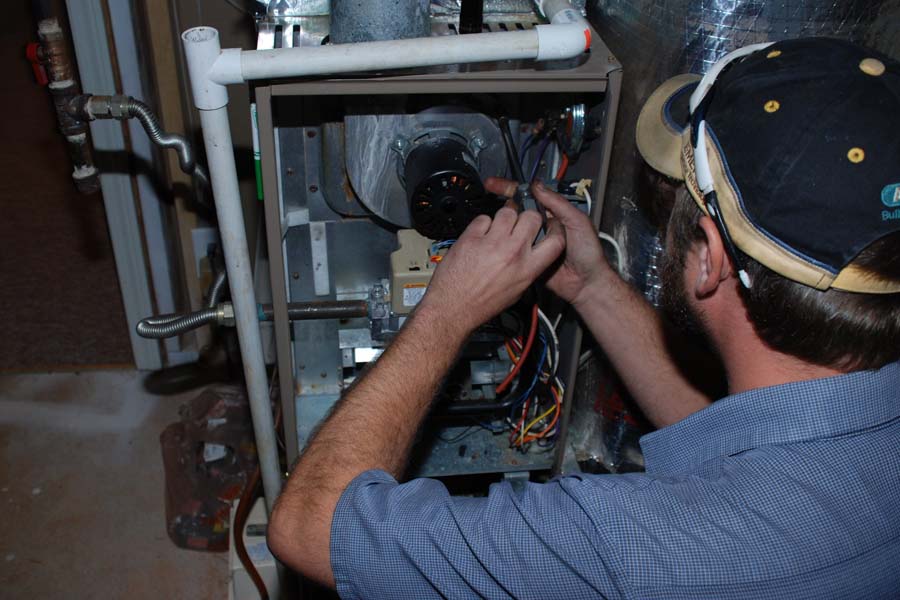
Whether your Suwanee home has a furnace that was installed during the Clinton administration or one that came with a new build certificate five years ago, these warning signs apply equally and deserve attention before they escalate.
Smart thermostat data is something a lot of Suwanee homeowners have access to but do not always use as a diagnostic tool. If your thermostat history shows run times increasing season over season without a change in setpoint or weather severity, that trend is telling you something about your system’s efficiency before the problem becomes obvious in any other way.
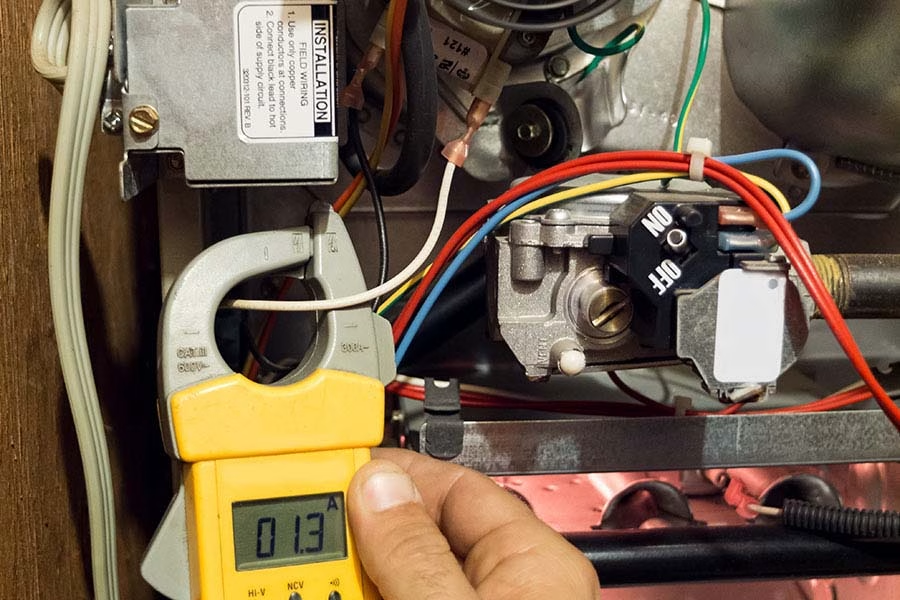
Suwanee’s mix of housing ages produces two distinct failure profiles that we see on a regular basis. In the older subdivisions, the dominant pattern right now is heat exchanger deterioration combined with blower motor fatigue in systems that are pushing 20 to 25 years of service. These are the original furnaces from the mid-to-late 1990s building cycle, and they are failing in clusters as the mechanical wear accumulated over two decades of Georgia winters finally catches up with them. Heat exchangers in that age range often show stress cracks near the burner ports that are invisible without a proper inspection, and the combustion gas risk those cracks carry makes them a priority to find.
In Suwanee’s newer and more upscale construction, the failure profile shifts toward high-efficiency modulating furnace complexity. Variable-speed blowers, two-stage gas valves, and communicating thermostat systems offer genuine performance advantages but introduce more potential failure points than a simple single-stage system. When a communicating system component fails, the diagnostic process requires a technician who understands how those systems communicate internally, not just how to test individual parts in isolation. We see misdiagnoses in these systems fairly regularly when homeowners use companies that are not current on that equipment generation.
Condensate management is a consistent issue across both housing types in Suwanee. High-efficiency furnaces produce acidic condensate that degrades drain lines faster than water alone would, and in Georgia’s climate the combination of winter heating and summer humidity creates conditions where condensate lines clog and back up more frequently than homeowners expect. A backed-up condensate line triggers a safety lockout that shuts the furnace down completely, and it is one of the more common reasons for emergency calls in this area.
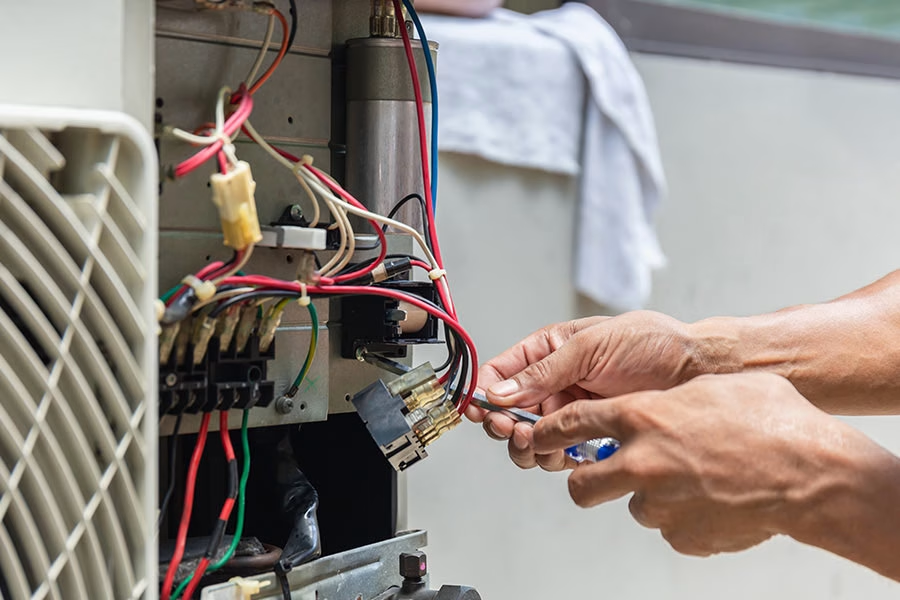
The range of equipment types in Suwanee requires a technician who is equally comfortable with a 1998 single-stage furnace and a current-generation communicating modulating system, and that versatility is something we invest in deliberately through monthly training. When we arrive, the diagnostic process is calibrated to the system type in front of us rather than a generic checklist. For older systems, that means a thorough heat exchanger inspection, combustion analysis, and blower performance evaluation. For newer high-efficiency equipment, it means reading the system’s internal fault history, testing the modulating valve, and verifying that communicating components are talking to each other correctly.
We also pay attention to the relationship between the furnace and the home’s overall performance. In Suwanee’s premium construction, homes are often tightly built with mechanical ventilation systems that interact with the furnace in ways that affect combustion air supply and pressure balance. A furnace that is starved for combustion air in a tight house behaves differently than one in a leakier older home, and understanding that context is part of diagnosing correctly rather than just replacing parts until the symptom disappears.
Every repair is backed by a full one-year warranty on parts and labor. Our NATE-certified technicians train monthly on all makes and models, with specific focus on both the aging equipment common in Suwanee’s established neighborhoods and the advanced modulating systems found in its newer builds. One team handles both ends of the spectrum with the same standard of care.
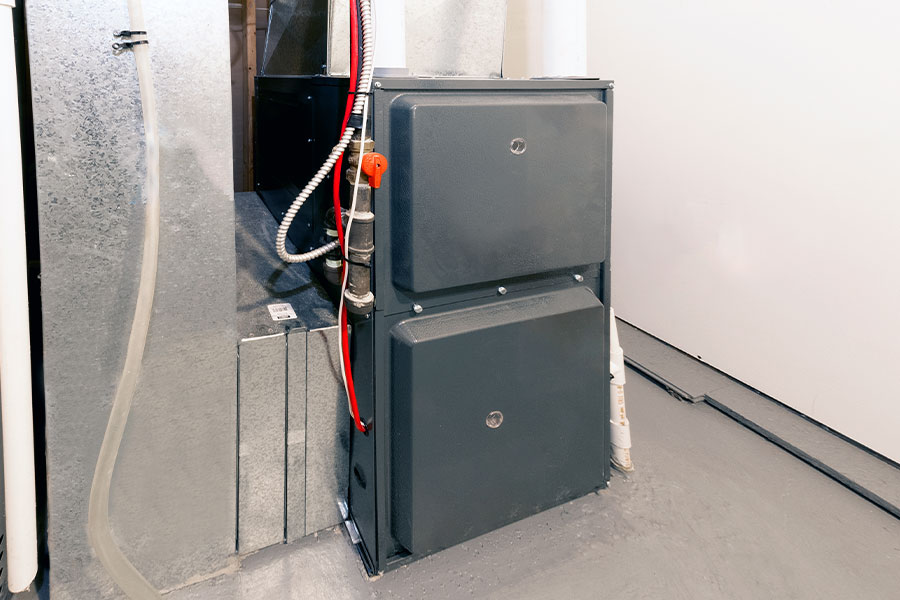
Olde Atlanta Club is one of Suwanee’s most established communities, with homes built primarily in the 1990s on wooded lots surrounding a golf course. The setting is beautiful, and the homes are well maintained, but the original mechanical systems in many of them are firmly in the failure window. We got a call last February from a homeowner named Robert whose furnace had been running continuously since a cold front moved through but could not push the house past 66 degrees regardless of what he set the thermostat to.
Our technician arrived and started with the heat exchanger, which is always the first priority in a system of that age. A close inspection found a stress crack near the secondary port on the right side of the exchanger, not large enough to produce visible symptoms on its own but significant enough to require immediate attention. Beyond the heat exchanger, the blower motor capacitor had degraded substantially, which explained why the system was running constantly without moving adequate air. The furnace was producing heat but the delivery system was too compromised to distribute it effectively.
We shut the system down for safety given the heat exchanger finding and walked Robert through his options clearly. He opted to replace the system rather than repair a cracked exchanger in a 24-year-old furnace, which was the decision we would have made in his position as well. We had a new system installed within two days and the house was back to full comfort before the cold front fully cleared. Robert appreciated that we found the heat exchanger issue rather than just addressing the blower and leaving a safety problem in place. That kind of thoroughness is not optional for us.
Suwanee homeowners have high expectations, and we think that is entirely reasonable. A city that takes pride in its community deserves an HVAC company that takes pride in its work. Here is what we bring to every job here.
More than 75 trained professionals are ready across north Georgia and Gwinnett County. Whether your home has a furnace from 1997 or a communicating system installed last year, we have the training and experience to take care of it correctly.
Communicating systems use digital signals between the furnace, air handler, and thermostat rather than simple voltage switching. When a component fails, the system often produces fault codes that require a technician familiar with that specific communication protocol to interpret correctly. Technicians who are not current on that equipment generation may replace individual parts without understanding how the components interact, which leads to misdiagnosis and repeat service calls.
Most smart thermostats log runtime data that can reveal developing problems before they become obvious failures. If your thermostat history shows run times increasing season over season without a change in setpoints or unusually cold weather, that trend suggests the system is losing efficiency. Sharing that data with a technician at the start of a service call gives them useful context that speeds up the diagnostic process.
High-efficiency furnaces extract so much heat from combustion that the exhaust condenses into liquid before it leaves the system. That condensate drains through a line that can clog with algae, debris, or mineral deposits over time. When the line backs up, a safety float switch triggers a full system lockout to prevent water damage. It is one of the most common emergency calls we receive in Suwanee and is typically resolved on the same visit.
Not automatically, but it is a serious finding that warrants a careful cost-benefit conversation. In a furnace under 15 years old, heat exchanger replacement may make financial sense. In a system approaching or past 20 years, the cost of the repair relative to the remaining service life of other components often makes full replacement the more practical choice. We lay out both options honestly and let you decide.
Yes. Our technicians train monthly on all equipment generations, from older single-stage gas furnaces common in Suwanee’s 1990s subdivisions to current-generation variable-speed and modulating systems in its newer construction. We maintain that range of knowledge deliberately because the homes in this area span both ends of the equipment spectrum and deserve technicians who can handle either one correctly.